Quick answer
Concrete shrinks as it cures and moves with temperature changes, and it will crack wherever stress builds up. Joint cutting saws shallow, straight grooves into a slab so that cracking happens neatly inside the joint instead of randomly across the surface.
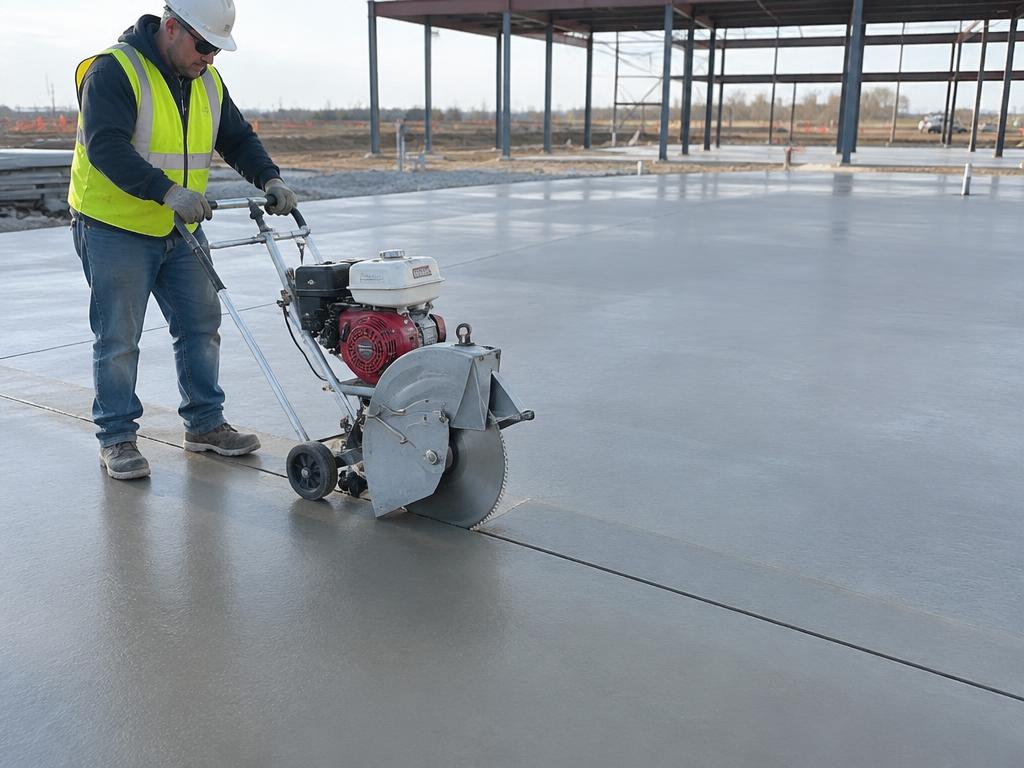
What is concrete expansion joint cutting?
Timing matters. Control joints in new concrete are typically sawed within hours of finishing — often with an early-entry saw — once the surface can support the saw without raveling. Joints can also be re-cut or widened in older slabs before sealing.
Typical applications
- Control joints in newly poured driveways, patios, and sidewalks
- Joint layouts for warehouse, shop, and garage floors
- Re-cutting worn or filled joints before resealing
- Widening joints to accept new joint filler or sealant
- Isolation cuts around columns, drains, and equipment pads
- Joints in parking areas and loading docks
Residential and commercial projects
Homeowners & residential
Residential jobs include cutting joints the day after a driveway or patio pour, or adding joints to a garage floor that has started cracking at random.
Contractors & commercial
Concrete finishers and general contractors schedule joint sawing as part of large slab pours, where a planned joint pattern and correct timing are critical.
Factors that affect pricing
We don't publish prices — quotes are based on the details of your project. These are the factors that typically matter:
- Total linear feet of joints
- Required depth (often about one-quarter of slab thickness)
- Fresh-pour timing — after-hours or same-day scheduling
- New slab versus re-cutting existing joints
- Whether joint cleaning or sealing is needed
- Indoor versus outdoor work
What to include in your quote request
- Pour date and time (for new slabs)
- Slab size and thickness
- Joint spacing or a layout drawing, if you have one
- Whether the slab is new or existing
- Photos of the area
Safety and preparation
- Fresh slabs must be firm enough for the saw — cutting too early ravels edges, cutting too late risks random cracks.
- Wet cutting controls silica dust; keep people and finished surfaces clear of slurry.
- Joint layout should follow the engineer's or finisher's plan for structural and commercial slabs.
Frequently asked questions
What's the difference between control joints and expansion joints?
Control joints are sawed grooves that guide where shrinkage cracks form. Expansion or isolation joints are full-depth gaps that let concrete move against walls, columns, or other slabs. Both are often called expansion joints in everyday use.
How soon after pouring should joints be cut?
Usually within the first several hours to a day, depending on weather and the concrete mix. Early-entry saws allow cutting sooner. Share your pour time so cutting can be planned.
How deep should control joints be?
A common guideline is about one-quarter of the slab's thickness, but your project's specifications or engineer's plan should govern.
Can joints be added to an old slab?
Yes. Joints can be cut into existing concrete to help control future cracking, though they won't fix cracks that already exist.
Ready to get started?
Murfreesboro Concrete Cutting is your local source for concrete cutting, sawing, and core drilling in Murfreesboro and the surrounding communities. Call to discuss your project, or request a free quote and a concrete cutting professional will reach out to you.