Quick answer
Many remodels hit concrete sooner or later. Relocating a bathroom on a slab foundation, adding a basement kitchen, running power to a new shop, or installing a sump pit all require cutting into existing concrete.
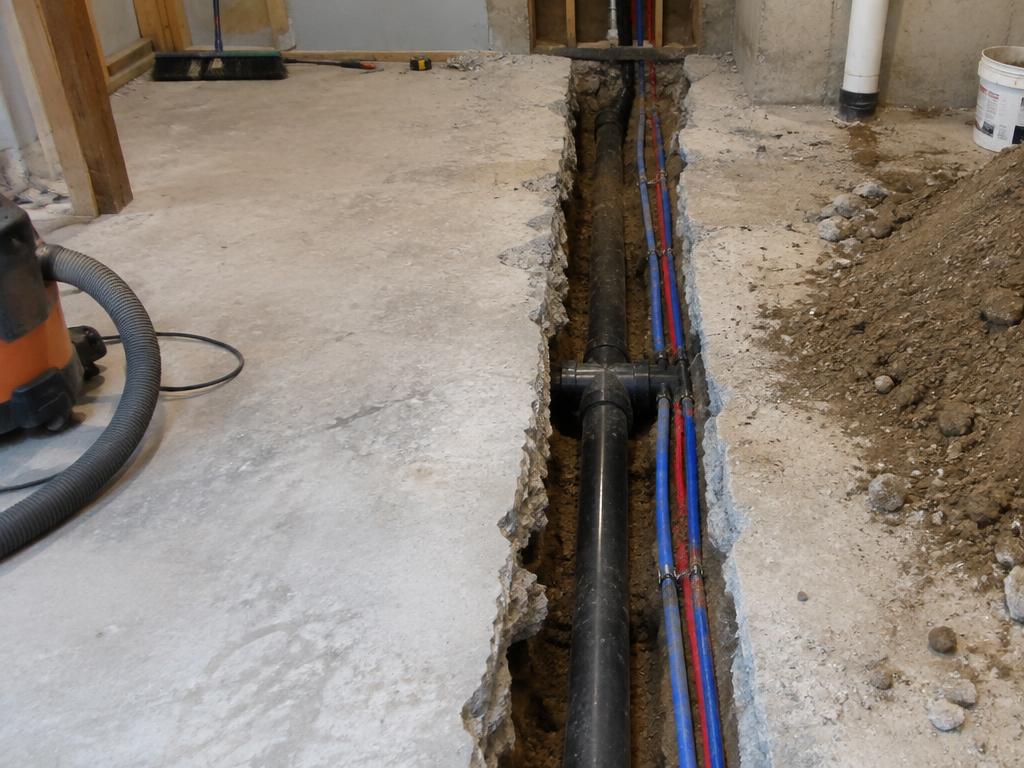
What is renovation & utility openings?
Renovation cutting usually combines methods — slab sawing for trenches, core drilling for penetrations, and wall sawing for openings — and has to be done carefully inside a lived-in home or working building.
Typical applications
- Under-slab plumbing trenches for bathroom and kitchen relocations
- Sump pit and ejector basin openings
- Electrical trenches for islands, shop equipment, or EV chargers
- Basement egress window and door openings
- Utility access openings for repairs to broken drain lines
- Removing slab sections for new footings
Residential and commercial projects
Homeowners & residential
Plumbers, remodelers, and homeowners commonly request trenches for new drain lines, openings to repair failed under-slab pipes, and egress cuts for basement bedrooms.
Contractors & commercial
Restaurants, retail spaces, and offices frequently need trenching for new restrooms, floor sinks, or relocated equipment during remodels.
Factors that affect pricing
We don't publish prices — quotes are based on the details of your project. These are the factors that typically matter:
- Trench length, width, and slab thickness
- Indoor dust and slurry protection for finished spaces
- Whether break-out, excavation, and haul-off are included
- Patching or re-pouring after the trade work is complete
- Access through the home or building
What to include in your quote request
- What trade work the cut is for (plumbing, electrical, etc.)
- A sketch or photos with the cut lines marked
- Whether the space is finished and occupied
- Who is handling excavation and patching
- Your plumber or remodeler's schedule
Safety and preparation
- Water, gas, and electrical lines may run through or under slabs. Confirm locations with your plumber or electrician and consider scanning.
- Indoor cutting should use electric equipment, slurry control, and protection for flooring, walls, and HVAC returns.
- Plumbing and electrical work typically requires permits and inspections; check with your local codes office.
Frequently asked questions
Who patches the trench after plumbing is installed?
It varies. Some crews offer patching; often the plumber or general contractor handles it. Clarify responsibilities when you get quotes.
How wide does a plumbing trench need to be?
Width depends on pipe size, depth, and the plumber's working room. Your plumber should specify the trench layout before cutting begins.
Can cutting be done while we live in the house?
Usually, yes. Expect noise for the duration of cutting and plan to protect finishes. Water or vacuum systems are used to control dust.
Do I need an egress window permit?
Egress windows are typically regulated by building codes and often need a permit. Check with your local building department.
Ready to get started?
Murfreesboro Concrete Cutting is your local source for concrete cutting, sawing, and core drilling in Murfreesboro and the surrounding communities. Call to discuss your project, or request a free quote and a concrete cutting professional will reach out to you.